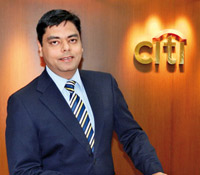
Monday, December 10, 2012

Mark Sanborn, bestselling author & an authority on leadership and customer service, tells Sushmita Yadav how one failure in life can be a life-changing experience and put you on the winning track

Q. What has been the most memorable moment of your career? 
A. Receiving the Cavett Award from the National Speakers Association. The award is based on service to NSA and the speaking profession, and not professional achievements and success. So I found that award to be most meaningful. To me, great leadership always benefits the greater good. In business, profit is essential, but it should not be the only goal. Profit should be the means to greater purposes which include not just growth for the organisation but also benefits for employees, customers and the greater community.

Q. You are among the most sought-after speakers on corporate training. What preparations do you do before a lecture? Which has been your most memorable one?
A. All my presentations are memorable to me because an audience has shared with me its most valuable resource: time. I take all my opportunities to speak very seriously. My goal is to combine what I know and have developed (my intellectual property) with the specific needs, objectives, and aspirations of the audience. That means spending time talking to organisation leadership about their objectives for my presentation, research that I conduct using the internet and —most importantly — reflecting on what I can say that will be most helpful in meeting the client’s objectives.

Q. You emphasise on passion in both professional and personal life. How passion is vital to one’s growth and how one can best utilise it?
A. I believe passion is the fuel of greatness, but I also believe that it is not enough to be passionate without a process for achieving your goals and desires. Passion without process is like gasoline without an automobile. You need both to get to reach your destination.

The first step to identifying your passion or passions is to ask the question, “What matters?”. We are most passionate about those things, personally and professionally, that matter most to us. And remember, you can be passionate about four things: what you do, how you do it, why you do it, and whom you do it for. Click here to read more...

Read More IIPM Related Articles
Zee Business Best B-School Survey 2012
Prof. Arindam Chaudhuri's Session at IMA Indore
IIPM IN FINANCIAL TIMES, UK. FEATURE OF THE WEEK
IIPM strong hold on Placement : 10000 Students Placed in last 5 year
IIPM's Management Consulting Arm-Planman Consulting
Professor Arindam Chaudhuri - A Man For The Society....
IIPM: Indian Institute of Planning and Management
IIPM makes business education truly global
Management Guru Arindam Chaudhuri
Rajita Chaudhuri-The New Age Woman
IIPM B-School Facebook Page
IIPM Global Exposure
IIPM Best B School India
IIPM B-School Detail
IIPM Links
IIPM : The B-School with a Human Face

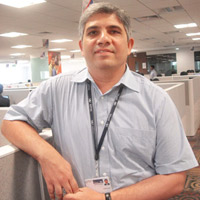
Monday, December 03, 2012

The onus is on HR to come up with the best plan of action to attain this goal successfully.

During a turnaround, the HR is expected to lead from the front and stay proactive in its dealings with the employees. The crisis is to ensure the ship (organisation) revives from near-drowning and starts floating smoothly. Any change management is important to set the agenda for change, take the employee onboard and ensure that they understand the importance of change. It is imperative that they gain commitment to delivery, execute effectively, and monitor and communicate progress regularly. Even small achievements need to be celebrated, since that will make sure that employees are engaged and motivated.

The best strategy to be applied during times of change by an organisation is to identify its top performers. It should ensure that the best employees and high-potentials are retained, as trying to retain all employees will not be successful.

Monday, November 26, 2012

HR plays a significant role in turnaround situations by creating and deploying people strategies.

As a first step, we conducted several group sessions to gauge the pulse of employees. The exercise provided valuable insights. These were used to create focused communication to address the insecurities and issues faced by them. Over 20 sessions were conducted by a team of managers to communicate “what’s happening and why”, “what can be the possible outcome” and “the available opportunities in the new environment”.

To ensure the message was right and consistent, briefings were conducted in partnership with the HR team. Performance appraisals were conducted in a fair and transparent manner. It ended with promotions and enhanced responsibilities to deserving individuals. Rather than cutting costs on training, we invested in development programmes in the areas of skill enhancement, change and leadership management. The assurance of job security provided stability to the environment. All this was further supported by conceiving an atmosphere of energy and positive change – billboards of success stories were introduced. ‘Wall of Fame’ and ‘Appreciation Wall’ were launched by employees.

Moreover, employee referral schemes were revised to attract best in class talent. All of the above were conceptualised and closely monitored by us but driven by business. The results were transformational – annual attrition levels dropped to below 2 per cent, as compared to the industry standard of 30 per cent. We retained most of our employees by ensuring that issues were addressed. Trust in leadership increased, while individual goals were aligned to organisational objectives. The fundamental learning is that leadership and business sponsorship are two sides of the same coin in driving people excellence. Read more...

Thursday, November 22, 2012

If an employee is performing and yet not getting his dues then obviously there is a disconnect.

Q. How far has HR been successful in meeting the expectations of the organisation? 
A. It cannot be generalised. HR has been contributing significantly, and that is why the importance of HR has been growing in the industry. If HR is aloof from the business needs and goes by the book then it cannot contribute.  

Q. How can HR help at the time of a merger or an acquisition? 
A. HR can significantly contribute in case of a major change by communicating with the employees the benefits of change and how the people and organisation will stand to gain if they adopt change. Automation, it was seen in 1980s, was generally met with resistance by the employees but gradually generations transformed and became tech savvy. Also, it is important to note that change is not always beneficial so a thorough investigation and analysis is required. Amalgamation of two cultures in an M&A, retention of high performing staff, implementation of best practices are some significant deliverables of HR which cannot be underestimated. Click here to read full interview...

Read More IIPM Related Articles
Zee Business Best B-School Survey 2012
Prof. Arindam Chaudhuri's Session at IMA Indore
IIPM IN FINANCIAL TIMES, UK. FEATURE OF THE WEEK
IIPM strong hold on Placement : 10000 Students Placed in last 5 year
IIPM's Management Consulting Arm-Planman Consulting
Professor Arindam Chaudhuri - A Man For The Society....
IIPM: Indian Institute of Planning and Management
IIPM makes business education truly global
Management Guru Arindam Chaudhuri
Rajita Chaudhuri-The New Age Woman
IIPM B-School Facebook Page
IIPM Global Exposure
IIPM Best B School India
IIPM B-School Detail
IIPM Links
IIPM : The B-School with a Human Face